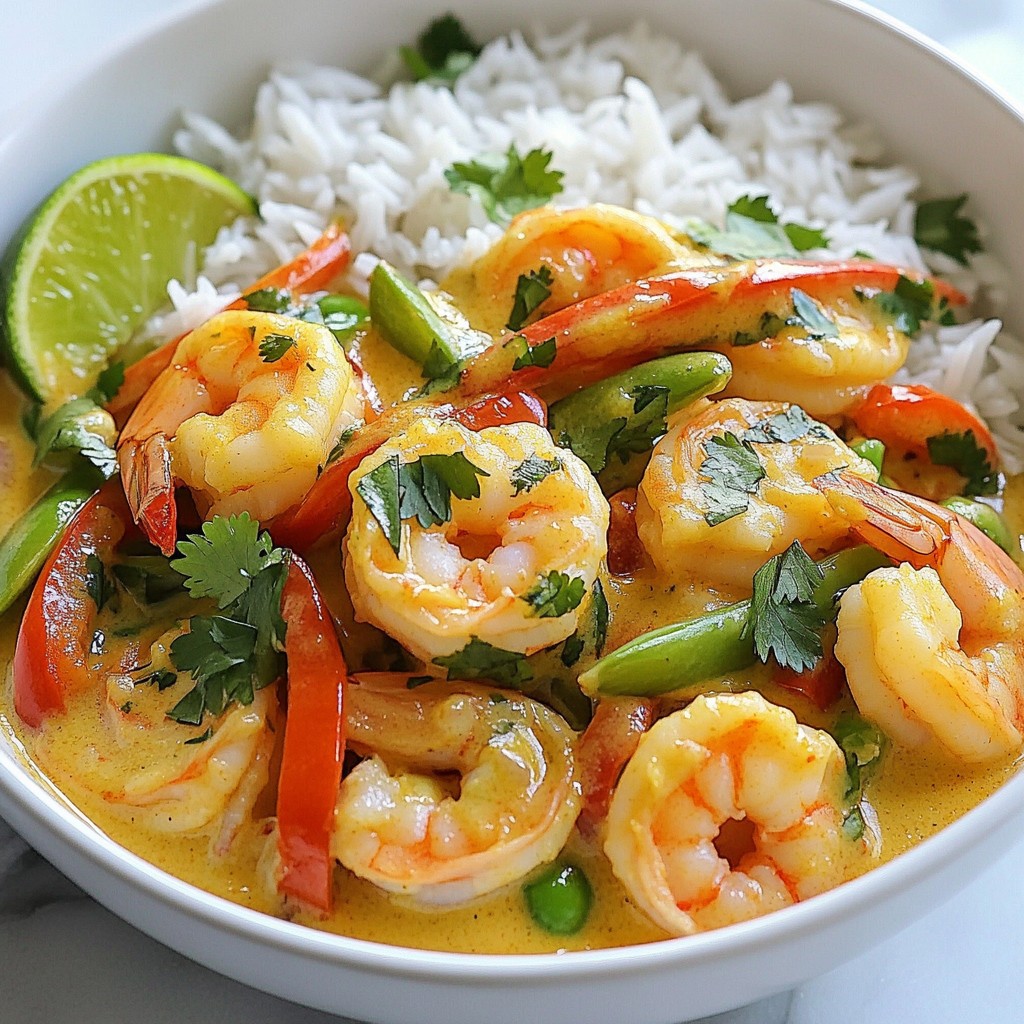
If you're craving a dish that bursts with flavor yet remains easy to prepare, look no further! My Coconut Lime Shrimp Curry delivers a delightful mix of creamy coconut, zesty lime, and succulent shrimp. This simple recipe combines fresh ingredients for a meal that's perfect any night of the week. Join me as we dive into this tropical delight that’s packed with taste and sure to impress your family and friends!
Why I Love This Recipe
- Bright and Zesty Flavor: The combination of lime and coconut creates a refreshing and vibrant taste that elevates the dish.
- Quick and Easy: This recipe comes together in just 30 minutes, making it perfect for busy weeknights.
- Colorful Presentation: The vivid colors of the shrimp, bell pepper, and snap peas make for an eye-catching meal.
- Comforting and Satisfying: Served over jasmine rice, this curry is both comforting and filling, perfect for any occasion.
Ingredients
Main Ingredients
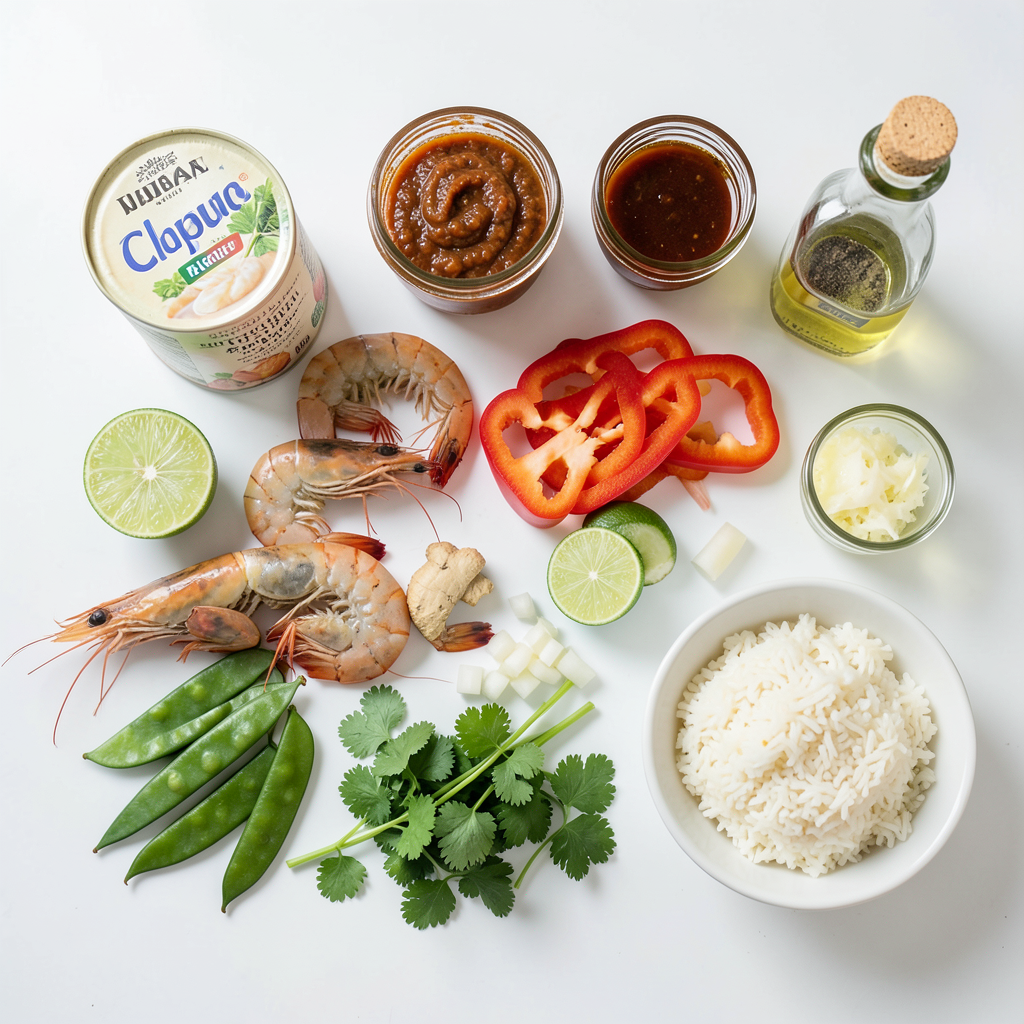
- 1 lb large shrimp, peeled and deveined
- 1 can (14 oz) coconut milk
- 2 tablespoons red curry paste
- 1 tablespoon fish sauce
- 1 tablespoon brown sugar
Vegetables & Aromatics
- 1 red bell pepper, sliced into thin strips
- 1 cup snap peas, trimmed and halved if large
- 1 small onion, finely diced
- 2 cloves garlic, minced
- 1 tablespoon fresh ginger, grated
Garnishing & Serving Suggestions
- Fresh cilantro, chopped, for garnish
- Cooked jasmine rice, for serving
- Lime wedges
Step-by-Step Instructions
Preparation
1. Start by heating a large skillet over medium heat. Drizzle in a splash of olive oil to coat the bottom.
2. Once the oil shimmers, add the diced onion, minced garlic, and grated ginger. Sauté for about 3-4 minutes. Stir frequently until the onion is soft and clear. The kitchen will smell great!
Building the Curry
1. Now, stir in the red curry paste. Cook for one more minute. Mix it well with the aromatics until you smell its strong scent.
2. Pour in the can of coconut milk. Then, add the fish sauce, brown sugar, and lime juice with the zest. Stir to mix it all together. Let it simmer gently for about 5 minutes. This helps the flavors blend nicely.
Finalizing the Dish
1. Add the sliced red bell pepper and snap peas to the curry. Cook for another 3 minutes. Stir occasionally until the veggies are tender but still bright and crunchy.
2. Next, gently add the shrimp to the skillet. Cook for 3-5 minutes, stirring now and then. The shrimp should turn pink and opaque when done. Season with salt and pepper to taste. Adjust it to your liking.
3. Once cooked, take the skillet off the heat. Garnish the curry with chopped cilantro for extra flavor and color.
4. Serve the coconut lime shrimp curry hot over warm jasmine rice. Add lime wedges on the side for a zesty kick!
Tips & Tricks
Cooking Techniques
Sautéing and simmering add depth to your coconut lime shrimp curry. Start by sautéing onions, garlic, and ginger. This step builds a strong flavor base. Use a medium heat to avoid burning. Once soft, add red curry paste to wake up the sauce.
Simmering follows sautéing. Pour in the coconut milk and other ingredients. Bring it to a gentle simmer. This allows the flavors to meld. Cook the shrimp until they turn pink and opaque. Aim for 3 to 5 minutes. Overcooked shrimp can become rubbery, so watch closely.
Flavor Enhancements
Adding extra garnishes can elevate your dish. Fresh cilantro brings a bright touch. Consider lime wedges for a zesty kick. These small additions can make a big impact on taste.
If you like heat, adjust the spice levels. Add more red curry paste or a dash of chili flakes. You control the spice! Start small and taste as you go.
Ingredient Substitutions
Not a fan of shrimp? Try chicken or tofu for a different twist. Both options cook well in this creamy curry. You can also use firm fish like salmon or cod.
For a dairy-free dish, stick with coconut milk. It gives that rich creaminess without dairy. You can also use vegetable broth for a lighter version. This keeps the flavor while catering to different diets.
Pro Tips
- Fresh Ingredients: Use fresh shrimp and vegetables for the best flavor and texture in your curry.
- Adjust Spice Level: If you prefer a milder curry, start with less red curry paste and add more to taste as it simmers.
- Perfect Coconut Milk: Shake the can of coconut milk before opening to ensure it's well mixed for a creamy consistency.
- Serve with Lime: Provide lime wedges on the side for an extra burst of tangy flavor that complements the dish beautifully.
Variations
Different Proteins
You can switch up your protein in this dish. If you want a change from shrimp, try using chicken or tofu.
- Chicken: Use boneless, skinless chicken thighs or breasts. Cut them into bite-sized pieces. Cook them in the skillet until they turn golden brown. Then, follow the same steps as with shrimp.
- Tofu: For a plant-based option, use firm tofu. Press it to remove excess water, then cut it into cubes. Sauté the tofu in the skillet until it's golden. Add it to the curry just like you would the shrimp.
You can also mix different seafood. Try adding scallops or mussels for a seafood medley.
Vegetarian Versions
If you want a vegetarian take, look at using beans or lentils.
- Beans: Black beans or chickpeas work well. They add protein and fiber. Stir them in after adding the coconut milk.
- Lentils: Red lentils cook quickly and absorb flavors well. Add them early in the cooking process with the coconut milk.
You can also add more vegetables for extra color and nutrition. Consider adding zucchini, carrots, or broccoli. These veggies will cook down nicely in the curry.
Regional Twist
Different regions have unique curry styles. You can bring a twist to your dish by choosing flavors inspired by Thai or Indian cuisine.
- Thai Flavors: Use fresh basil and lime leaves. These add bright, fresh notes.
- Indian Flavors: Consider adding garam masala or turmeric for warmth. These spices give a rich depth to the curry.
You can also incorporate local spices you love. This way, you create a dish that feels personal and fun.
Storage Info
Refrigeration Guidelines
To store leftovers, let the curry cool first. Place it in an airtight container. Make sure to seal it well. This keeps the flavors fresh. You can store it in the fridge for up to three days.
The best containers for storage are glass or BPA-free plastic. These materials are safe and help keep the curry's taste. Avoid metal containers, as they can react with the ingredients.
Freezing Instructions
To freeze portions, let the curry cool completely. Then, scoop it into freezer-safe bags or containers. Squeeze out the air to prevent freezer burn. You can freeze it for up to three months.
For thawing tips, move the curry to the fridge overnight. This gentle method keeps the texture nice. If you're in a hurry, you can use the microwave. Just use the defrost setting and stir often for even thawing.
Reheating Methods
You can reheat in the microwave or on the stovetop. For the microwave, place the curry in a bowl. Cover it with a microwave-safe lid or wrap. Heat in short bursts, stirring in between.
For stovetop reheating, place the curry in a skillet. Warm it on low heat, stirring often. This method helps keep the shrimp tender and the veggies crisp.
To maintain texture and flavor, add a splash of coconut milk if needed. This keeps the curry creamy and delicious. Enjoy your meal without losing its charm!
FAQs
Common Questions
How can I make it less spicy? To reduce heat, use less red curry paste. You can also add more coconut milk. This adds creaminess without spice. Adding a touch of brown sugar can help balance flavors too.
Can I use other types of shrimp? Yes, you can use any shrimp you like. Smaller shrimp work well too. Just adjust cooking time as needed. Frozen shrimp is fine, but thaw it first for best results.
Nutritional Info
Caloric content per serving Each serving has around 350 calories. This includes shrimp, coconut milk, and veggies. It’s a hearty meal that fits well into a balanced diet.
Allergen information This dish contains shellfish and fish sauce. If you have allergies to these, consider using chicken or tofu. Always check labels for any hidden allergens in sauces.
Serving Suggestions
What goes well with coconut lime shrimp curry? Serve it over jasmine rice for a perfect match. You can also pair it with naan bread. A light salad adds freshness and balance to the meal.
Can I serve it as a starter or appetizer? Yes, you can serve smaller portions as an appetizer. Just use smaller bowls for serving. Adding lime wedges makes them fun and interactive for guests.
In this blog post, we explored making a delicious coconut lime shrimp curry. We covered key ingredients like shrimp, coconut milk, and spices. You learned how to prepare, build, and finalize the dish with fresh veggies. Tips on cooking techniques and ingredient swaps added extra flavor. We also shared storage info and answered common questions.
Cooking is fun, and this curry shows how easy it can be. Enjoy your culinary journey and share your tasty creations with friends!