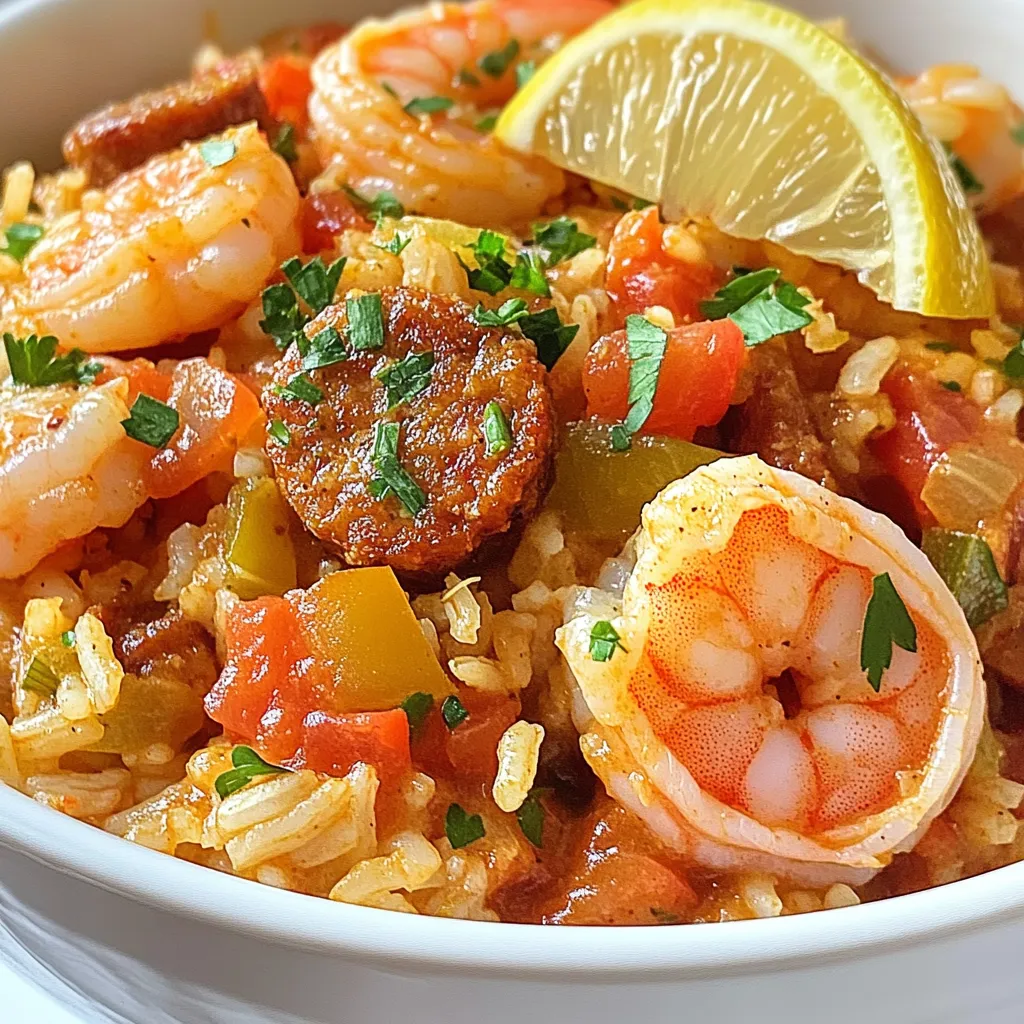
One Pot Shrimp and Sausage Jambalaya Delight

WANT TO SAVE THIS RECIPE?

Welcome to your next favorite dish: One Pot Shrimp and Sausage Jambalaya Delight! This simple, tasty meal bursts with flavors that will make your taste buds dance. You can have a feast ready in just one pot, making cleanup a breeze. Whether you’re a kitchen newbie or a seasoned chef, I’ll guide you step-by-step to create this comforting classic. Let’s dive in and cook up some jambalaya magic!

Why I Love This Recipe

  1. Bold Flavors: This jambalaya is packed with a robust mix of spices and ingredients that create a deliciously complex flavor profile.
  2. One-Pot Wonder: Cooking everything in one pot makes for easy cleanup and allows the flavors to meld beautifully.
  3. Customizable Ingredients: You can adjust the protein or add more vegetables based on your preferences and what’s in season.
  4. Perfect for Sharing: This dish is great for gatherings, providing a hearty meal that can serve a crowd easily.

Ingredients

Main Ingredients

Shrimp and sausage selection

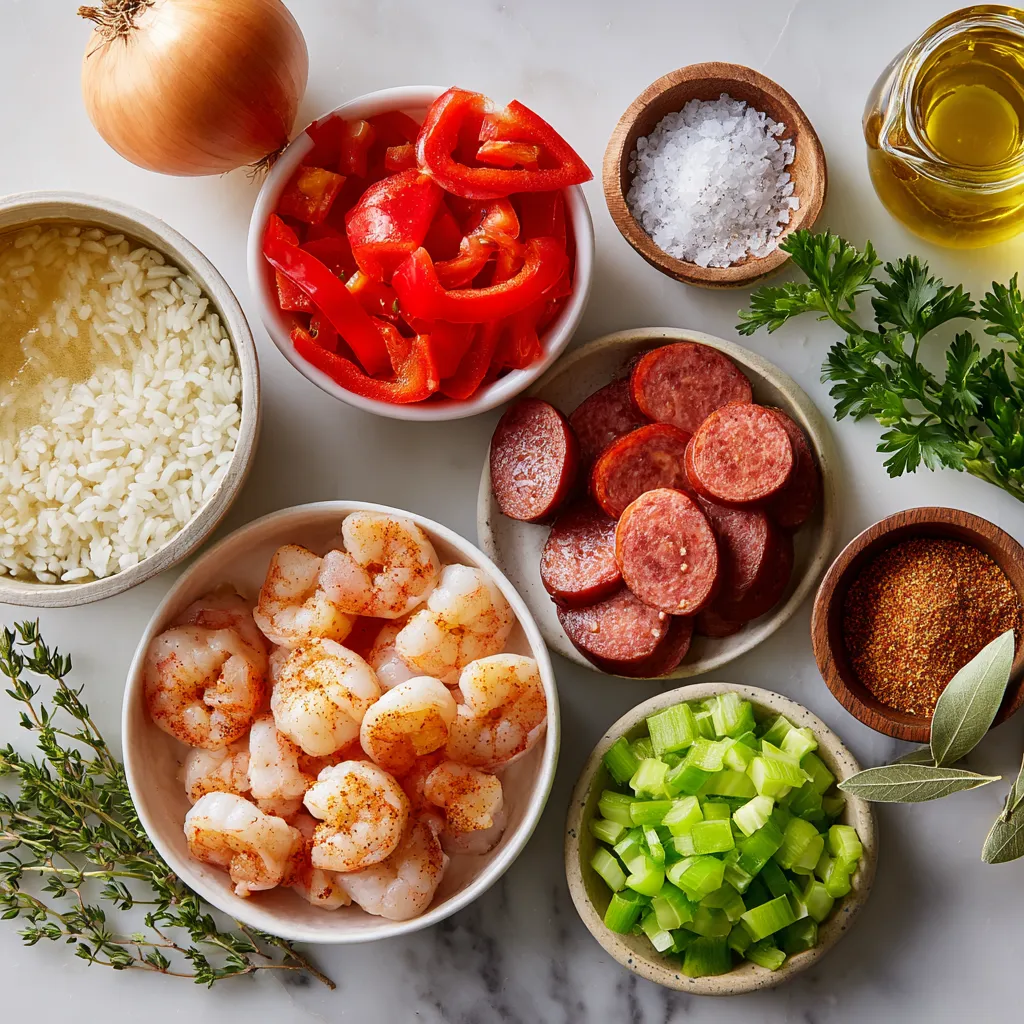
– Use 1 pound of shrimp, peeled and deveined.

– Choose 1 pound of smoked sausage, sliced into rounds for flavor.

Rice and vegetable components

– Measure 1 cup of long-grain rice for the base.

– Dice 1 medium onion, 1 bell pepper (red or green), and 2 celery stalks.

– Mince 4 cloves of garlic for strong flavor.

Seasonings and broth essentials

– Grab 1 can (14.5 oz) of diced tomatoes, undrained.

– Pour in 4 cups of low-sodium chicken broth for depth.

– Use 2 teaspoons of Cajun seasoning, 1 teaspoon of dried thyme, and 1 bay leaf.

– Season with salt and pepper to taste.

– Include 2 tablespoons of olive oil for cooking.

Optional Garnishes

Fresh parsley and lemon slice

– Chop fresh parsley to add color and taste.

– Serve with a lemon slice for a zesty kick.

Other topping suggestions

– Consider adding diced green onions or a sprinkle of hot sauce for extra flavor.

– Serve with crusty bread to soak up the juices.
Step-by-Step Instructions

Preparation Steps

Start by prepping your ingredients. For the shrimp, peel and devein them. For the sausage, slice it into rounds. Dice the onion, bell pepper, and celery. Mince the garlic.

Next, measure out one cup of long-grain rice. You will also need four cups of chicken broth. This liquid adds flavor and helps the rice cook well.

Cooking Process

Heat two tablespoons of olive oil in a large pot over medium-high heat. Add the sliced sausage to the pot and sauté it for about five minutes. You want the sausage to be nicely browned. After that, transfer it to a plate.

In the same pot, add the diced onion, bell pepper, and celery. Sauté these veggies for about three to four minutes. Stir occasionally until the onion turns soft. Then, add the minced garlic and cook for another minute. This makes the kitchen smell great.

Now, return the browned sausage to the pot. Add the rice, undrained diced tomatoes, chicken broth, Cajun seasoning, dried thyme, and the bay leaf. Don’t forget to season with salt and pepper. Stir everything together well.

Increase the heat and bring the mixture to a rolling boil. Once it boils, reduce the heat to low. Cover the pot tightly and let it simmer for about 20 minutes. This allows the rice to cook and absorb the liquid.

Final Steps

After 20 minutes, gently fold in the shrimp. Cook this uncovered for another five minutes. The shrimp will turn pink and opaque, showing they are fully cooked.

Remove the pot from heat and discard the bay leaf. Let the jambalaya rest for about five minutes. This helps the flavors blend better before serving.

For presentation, spoon the jambalaya into bright bowls. Sprinkle freshly chopped parsley on top for a pop of color. You can also add a slice of lemon on the side. This gives a fresh flavor that everyone will enjoy.

Tips & Tricks

Cooking Tips

Using low-sodium broth is key. It lets you control the salt in your dish. You can always add more salt later if needed. This helps keep the flavors balanced and fresh.

Adjust the spice level with Cajun seasoning. Start with less if you’re unsure. You can always add more later. This way, everyone can enjoy the dish, even those who prefer milder flavors.

Serving Suggestions

Pair your jambalaya with simple sides. A fresh green salad works great. You can also serve it with warm, crusty bread. Both add contrast to the rich flavors of the jambalaya.

When it comes to drinks, a light white wine is nice. A crisp Sauvignon Blanc complements the spices well. If you prefer non-alcoholic options, try iced tea or lemonade. Both refresh the palate.

Common Mistakes to Avoid

Avoid overcooking the shrimp. They cook quickly. When they turn pink and opaque, they’re done. If you cook them too long, they become tough.

Don’t skip the resting time. Letting the dish sit for 5 minutes allows the flavors to blend. It makes each bite more delicious. Serve it right after resting for the best taste.

Pro Tips

  1. Perfecting the Shrimp: Make sure to add the shrimp at the end of cooking to prevent overcooking, which makes them tough. They should be pink and opaque when done.
  2. Adjusting Spice Levels: Cajun seasoning can vary in heat. Start with less and adjust according to your taste preference, adding more gradually.
  3. Resting Time: Allow the jambalaya to rest for a few minutes after cooking. This helps the flavors meld together for a more delicious dish.
  4. Garnish Wisely: Fresh parsley not only adds color but also brightens the flavors. Consider adding a squeeze of fresh lemon juice for extra zest before serving.

Variations

Alternative Proteins

You can swap the sausage for chicken or tofu. Chicken adds a mild flavor, while tofu gives a plant-based option. Both choices work well with jambalaya. Adjust cooking times for chicken to ensure it is cooked through. Tofu can be added without much change in cooking time. This lets everyone enjoy the dish, no matter their diet.

Ingredient Swaps

Different rice types can change the dish’s texture. Jasmine rice or brown rice are great substitutes. Keep in mind that cooking times may vary. You can also swap veggies based on what’s in season. Try zucchini in summer or root veggies in winter. This makes your jambalaya fresh and fun.

Flavor Enhancements

Want more kick? Add hot sauce or spices. You can also boost flavor with extra veggies like mushrooms or peas. Legumes like black beans or chickpeas add protein and texture. Experimenting with these additions makes each batch unique and exciting.

Storage Info

Refrigeration Guidelines

To store your leftovers, place them in an airtight container. This keeps the dish fresh and tasty. When stored this way, your jambalaya will hold well for about 3 to 4 days in the fridge. Make sure to let it cool down before sealing it up.

Freezing Instructions

You can freeze portions for future meals. Just scoop servings into freezer-safe containers. Leave some space at the top for the food to expand. The jambalaya can last up to 3 months in the freezer. When you’re ready to eat it, thaw it in the fridge overnight. This slow thaw helps keep the flavor intact.

Reheating Methods

For reheating, you can use either the stovetop or the microwave. If you choose the stovetop, warm it over low heat. Stir occasionally to avoid sticking. For the microwave, heat in short bursts. Stir in between until hot. Both methods work well. Just be careful not to overcook the shrimp. This keeps the texture and flavor just right.

FAQs

How do I make One Pot Shrimp and Sausage Jambalaya spicier?

To add heat, you can:

Add more Cajun seasoning: Start with an extra teaspoon. Taste and adjust as needed.

Incorporate hot peppers: Dice jalapeños or serranos and mix them in while cooking. This gives a nice kick.

Can I use frozen shrimp for this recipe?

Yes, you can use frozen shrimp. Here’s how:

Thaw first: Place shrimp in cold water for 10-15 minutes until they are soft.

Cook normally: Add the thawed shrimp to the pot just like fresh shrimp. They will still taste great!

What can I substitute for smoked sausage?

If you need a different sausage, consider these options:

Andouille sausage: This gives a similar flavor.

Chicken sausage: A lighter choice with great taste.

Vegetarian options: Use plant-based sausage or skip it entirely and add more veggies.

Is jambalaya gluten-free?

Yes, jambalaya can be gluten-free. Check the following:

Ingredient labels: Ensure your chicken broth and sausage are gluten-free.

Using gluten-free alternatives: You can swap regular rice for brown rice or a gluten-free grain if needed.

In this post, we explored how to make One Pot Shrimp and Sausage Jambalaya. We covered ingredients like shrimp, sausage, rice, and seasonings. I gave you steps for preparation, cooking, and serving. You learned tips to avoid common mistakes and how to make variations.

Jambalaya is fun to make and easy to customize. Try different proteins and veggies to suit your taste. With these guidelines, you’re ready to create a tasty meal everyone will love. Your kitchen adventure starts no
- Shrimp and sausage selection - Use 1 pound of shrimp, peeled and deveined. - Choose 1 pound of smoked sausage, sliced into rounds for flavor. - Rice and vegetable components - Measure 1 cup of long-grain rice for the base. - Dice 1 medium onion, 1 bell pepper (red or green), and 2 celery stalks. - Mince 4 cloves of garlic for strong flavor. - Seasonings and broth essentials - Grab 1 can (14.5 oz) of diced tomatoes, undrained. - Pour in 4 cups of low-sodium chicken broth for depth. - Use 2 teaspoons of Cajun seasoning, 1 teaspoon of dried thyme, and 1 bay leaf. - Season with salt and pepper to taste. - Include 2 tablespoons of olive oil for cooking. - Fresh parsley and lemon slice - Chop fresh parsley to add color and taste. - Serve with a lemon slice for a zesty kick. - Other topping suggestions - Consider adding diced green onions or a sprinkle of hot sauce for extra flavor. - Serve with crusty bread to soak up the juices. {{ingredient_image_2}} Start by prepping your ingredients. For the shrimp, peel and devein them. For the sausage, slice it into rounds. Dice the onion, bell pepper, and celery. Mince the garlic. Next, measure out one cup of long-grain rice. You will also need four cups of chicken broth. This liquid adds flavor and helps the rice cook well. Heat two tablespoons of olive oil in a large pot over medium-high heat. Add the sliced sausage to the pot and sauté it for about five minutes. You want the sausage to be nicely browned. After that, transfer it to a plate. In the same pot, add the diced onion, bell pepper, and celery. Sauté these veggies for about three to four minutes. Stir occasionally until the onion turns soft. Then, add the minced garlic and cook for another minute. This makes the kitchen smell great. Now, return the browned sausage to the pot. Add the rice, undrained diced tomatoes, chicken broth, Cajun seasoning, dried thyme, and the bay leaf. Don’t forget to season with salt and pepper. Stir everything together well. Increase the heat and bring the mixture to a rolling boil. Once it boils, reduce the heat to low. Cover the pot tightly and let it simmer for about 20 minutes. This allows the rice to cook and absorb the liquid. After 20 minutes, gently fold in the shrimp. Cook this uncovered for another five minutes. The shrimp will turn pink and opaque, showing they are fully cooked. Remove the pot from heat and discard the bay leaf. Let the jambalaya rest for about five minutes. This helps the flavors blend better before serving. For presentation, spoon the jambalaya into bright bowls. Sprinkle freshly chopped parsley on top for a pop of color. You can also add a slice of lemon on the side. This gives a fresh flavor that everyone will enjoy. Using low-sodium broth is key. It lets you control the salt in your dish. You can always add more salt later if needed. This helps keep the flavors balanced and fresh. Adjust the spice level with Cajun seasoning. Start with less if you're unsure. You can always add more later. This way, everyone can enjoy the dish, even those who prefer milder flavors. Pair your jambalaya with simple sides. A fresh green salad works great. You can also serve it with warm, crusty bread. Both add contrast to the rich flavors of the jambalaya. When it comes to drinks, a light white wine is nice. A crisp Sauvignon Blanc complements the spices well. If you prefer non-alcoholic options, try iced tea or lemonade. Both refresh the palate. Avoid overcooking the shrimp. They cook quickly. When they turn pink and opaque, they're done. If you cook them too long, they become tough. Don't skip the resting time. Letting the dish sit for 5 minutes allows the flavors to blend. It makes each bite more delicious. Serve it right after resting for the best taste. Pro Tips Perfecting the Shrimp: Make sure to add the shrimp at the end of cooking to prevent overcooking, which makes them tough. They should be pink and opaque when done. Adjusting Spice Levels: Cajun seasoning can vary in heat. Start with less and adjust according to your taste preference, adding more gradually. Resting Time: Allow the jambalaya to rest for a few minutes after cooking. This helps the flavors meld together for a more delicious dish. Garnish Wisely: Fresh parsley not only adds color but also brightens the flavors. Consider adding a squeeze of fresh lemon juice for extra zest before serving. {{image_4}} You can swap the sausage for chicken or tofu. Chicken adds a mild flavor, while tofu gives a plant-based option. Both choices work well with jambalaya. Adjust cooking times for chicken to ensure it is cooked through. Tofu can be added without much change in cooking time. This lets everyone enjoy the dish, no matter their diet. Different rice types can change the dish's texture. Jasmine rice or brown rice are great substitutes. Keep in mind that cooking times may vary. You can also swap veggies based on what’s in season. Try zucchini in summer or root veggies in winter. This makes your jambalaya fresh and fun. Want more kick? Add hot sauce or spices. You can also boost flavor with extra veggies like mushrooms or peas. Legumes like black beans or chickpeas add protein and texture. Experimenting with these additions makes each batch unique and exciting. To store your leftovers, place them in an airtight container. This keeps the dish fresh and tasty. When stored this way, your jambalaya will hold well for about 3 to 4 days in the fridge. Make sure to let it cool down before sealing it up. You can freeze portions for future meals. Just scoop servings into freezer-safe containers. Leave some space at the top for the food to expand. The jambalaya can last up to 3 months in the freezer. When you’re ready to eat it, thaw it in the fridge overnight. This slow thaw helps keep the flavor intact. For reheating, you can use either the stovetop or the microwave. If you choose the stovetop, warm it over low heat. Stir occasionally to avoid sticking. For the microwave, heat in short bursts. Stir in between until hot. Both methods work well. Just be careful not to overcook the shrimp. This keeps the texture and flavor just right. To add heat, you can: - Add more Cajun seasoning: Start with an extra teaspoon. Taste and adjust as needed. - Incorporate hot peppers: Dice jalapeños or serranos and mix them in while cooking. This gives a nice kick. Yes, you can use frozen shrimp. Here’s how: - Thaw first: Place shrimp in cold water for 10-15 minutes until they are soft. - Cook normally: Add the thawed shrimp to the pot just like fresh shrimp. They will still taste great! If you need a different sausage, consider these options: - Andouille sausage: This gives a similar flavor. - Chicken sausage: A lighter choice with great taste. - Vegetarian options: Use plant-based sausage or skip it entirely and add more veggies. Yes, jambalaya can be gluten-free. Check the following: - Ingredient labels: Ensure your chicken broth and sausage are gluten-free. - Using gluten-free alternatives: You can swap regular rice for brown rice or a gluten-free grain if needed. In this post, we explored how to make One Pot Shrimp and Sausage Jambalaya. We covered ingredients like shrimp, sausage, rice, and seasonings. I gave you steps for preparation, cooking, and serving. You learned tips to avoid common mistakes and how to make variations. Jambalaya is fun to make and easy to customize. Try different proteins and veggies to suit your taste. With these guidelines, you’re ready to create a tasty meal everyone will love. Your kitchen adventure starts now!

Shrimp & Sausage Jambalaya Delight

A flavorful and hearty jambalaya featuring shrimp and smoked sausage, perfect for a comforting meal.
Prep Time 15 minutes
Cook Time 30 minutes
Total Time 45 minutes
Course Main Course
Cuisine Cajun
Servings 6
Calories 400 kcal

Ingredients
  

  • 1 pound shrimp, peeled and deveined
  • 1 pound smoked sausage, sliced into rounds
  • 1 cup long-grain rice
  • 1 medium onion, diced
  • 1 bell pepper diced (choose red or green for color)
  • 2 stalks celery, diced
  • 4 cloves garlic, minced
  • 1 can diced tomatoes, undrained (14.5 oz)
  • 4 cups chicken broth (low sodium recommended)
  • 2 teaspoons Cajun seasoning (adjust for spice preference)
  • 1 teaspoon dried thyme
  • 1 leaf bay leaf
  • to taste salt and pepper
  • 2 tablespoons olive oil
  • to taste fresh parsley, chopped (for garnish)

Instructions
 

  • In a large pot or Dutch oven, heat the olive oil over medium-high heat until shimmering.
  • Add the sliced sausage to the pot and sauté for about 5 minutes, or until the sausage is nicely browned. Transfer the cooked sausage to a plate and set aside.
  • In the same pot, add the diced onion, bell pepper, and celery. Sauté for about 3-4 minutes, stirring occasionally, until the vegetables begin to soften and the onion becomes translucent.
  • Introduce the minced garlic to the pot and cook for an additional minute, stirring constantly to prevent burning, until fragrant.
  • Return the browned sausage to the pot. Add the rice, undrained diced tomatoes, chicken broth, Cajun seasoning, dried thyme, and the bay leaf. Season the mixture with salt and pepper to taste and stir well to combine all the flavors.
  • Increase the heat and bring the mixture to a rolling boil. Once boiling, reduce the heat to low. Cover the pot with a tight-fitting lid and let it simmer for approximately 20 minutes, or until the rice is fully cooked and the liquid has been absorbed.
  • After 20 minutes of simmering, gently fold in the shrimp. Continue to cook, uncovered, for another 5 minutes, or until the shrimp turn pink and opaque, indicating they are fully cooked.
  • Remove the pot from heat and discard the bay leaf. Let the jambalaya rest for about 5 minutes to allow the flavors to meld before serving.
  • Just before serving, garnish each serving with a generous sprinkle of freshly chopped parsley to brighten the dish.

Notes

Spoon the jambalaya into vibrant bowls and finish with an additional sprinkle of parsley. Serve with a slice of lemon on the side for extra flavor.
Keyword Cajun, jambalaya, one-pot meal, sausage, shrimp

WANT TO SAVE THIS RECIPE?

Leave a Comment

Recipe Rating