
If you’re craving something warm and soothing, you’ve come to the right place. Roasted Butternut Squash Risotto is creamy comfort food at its best. I’ll guide you through easy steps to make this dish shine. We’ll cover essential ingredients, handy tips, and tasty variations to suit any palate. By the end of this post, you'll be eager to serve up your own bowl of this delicious risotto. Let’s dive in!
Why I Love This Recipe
- Seasonal Delight: This risotto perfectly embodies the flavors of fall with its creamy texture and sweet roasted butternut squash.
- Comfort Food: Risotto is the ultimate comfort food, and this recipe elevates it with a rich, savory taste that warms the soul.
- Versatile Dish: Easily adaptable, you can add your favorite herbs or vegetables to make this risotto uniquely yours.
- Impressive Presentation: With a sprinkle of fresh parsley and Parmesan, this dish looks as wonderful as it tastes, making it perfect for entertaining.
Ingredients
Essential Ingredients for Roasted Butternut Squash Risotto
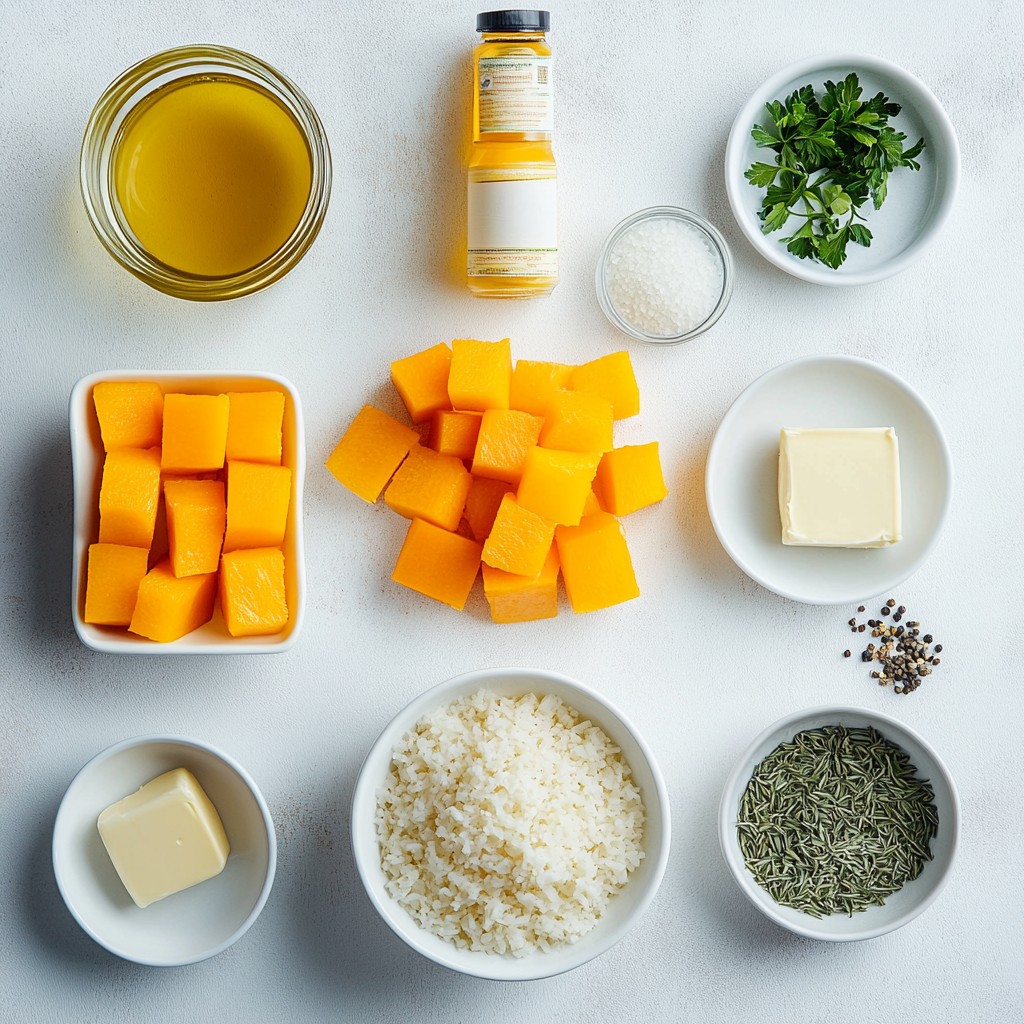
For a delicious roasted butternut squash risotto, gather these key items:
- 1 medium butternut squash, peeled and diced into 1-inch cubes
- 1 cup Arborio rice
- 4 cups vegetable broth, warmed (preferably homemade or low-sodium)
- 1 small onion, finely chopped
- 2 cloves garlic, minced
- 1 tablespoon extra virgin olive oil
- 1 tablespoon unsalted butter
- 1/2 cup freshly grated Parmesan cheese
- 1 teaspoon dried thyme
- Salt and freshly cracked black pepper to taste
These ingredients create a rich and creamy dish that brings warmth and joy.
Optional Garnishes
To elevate your risotto, consider adding these tasty garnishes:
- Fresh parsley, chopped
- Extra Parmesan cheese, for sprinkling
- Toasted pumpkin seeds for crunch
- A drizzle of balsamic glaze for sweetness
These garnishes add flavor and a beautiful touch to your meal.
Nutritional Information
Each serving of roasted butternut squash risotto is not only tasty but also nutritious. Here are some key points:
- Rich in vitamins A and C from squash
- Provides healthy fats from olive oil and butter
- Contains fiber from the rice and squash
- Offers protein from Parmesan cheese
This risotto makes a balanced dish that satisfies your hunger and nourishes your body.
Step-by-Step Instructions
Prepping the Butternut Squash
First, preheat your oven to 400°F (200°C). This step gets your oven ready for roasting. Next, take the medium butternut squash and peel it. Cut it into 1-inch cubes. In a bowl, toss the cubes with olive oil, salt, and black pepper. Spread the squash on a baking sheet in a single layer. Roast it for 25-30 minutes. Stir halfway through to ensure even cooking. The squash should be tender and caramelized when ready.
Making the Risotto Base
Now, let's make the risotto base. In a large saucepan, melt unsalted butter over medium heat. Add the finely chopped onion and minced garlic. Sauté them gently for about 4-5 minutes. You want the onion to be soft and fragrant but not brown. This adds a nice flavor to your risotto.
Cooking the Risotto to Perfection
Next, add the Arborio rice to the pan. Stir it in and cook for about 1-2 minutes. This helps coat the rice with the buttery mix. Now, gradually add the warmed vegetable broth, one ladle at a time. Stir often and let the rice absorb the broth before adding more. Keep this going for about 18-20 minutes. The rice should be al dente and creamy.
Incorporating Flavors and Final Touches
Once your rice is perfect, gently fold in the roasted butternut squash cubes. Add in the grated Parmesan cheese and dried thyme. Taste your risotto and adjust the seasoning with salt and black pepper as needed. Remove the risotto from heat and let it sit for about a minute to thicken slightly. Finally, serve it in bowls. Garnish with chopped parsley and extra Parmesan, if you like. Enjoy this creamy comfort food!
Tips & Tricks
How to Achieve Creamy Risotto
To get a creamy risotto, use Arborio rice. This rice has high starch content. Heat broth before adding it to the rice. It helps the rice cook evenly. Add broth slowly, one ladle at a time. Stir often; this helps release starch. The risotto should be creamy, not too thick.
Importance of Stirring and Timing
Stirring is key to perfect risotto. It keeps the rice moving and prevents sticking. Timing matters too. Cook the rice for about 18-20 minutes. This gives you a nice al dente bite. If you add broth too fast, the rice won’t cook well. Patience is your friend here.
Best Practices for Roasting Butternut Squash
Roasting butternut squash brings out its sweet flavor. First, peel and cube the squash evenly. Toss it with olive oil, salt, and pepper. Spread the cubes on a baking sheet. Roast at 400°F (200°C) for 25-30 minutes. Stir halfway through cooking for even browning. You want the squash tender and caramelized.
Pro Tips
- Choose the Right Squash: For the best flavor, opt for a butternut squash that feels heavy for its size and has a smooth, unblemished skin.
- Broth Temperature Matters: Always use warm broth when adding to the risotto; this helps maintain the cooking temperature and ensures a creamy texture.
- Stir Constantly: Frequent stirring helps release the starches from the rice, creating that signature creamy consistency that risotto is known for.
- Finish with a Flair: For a gourmet touch, add a drizzle of high-quality olive oil or a sprinkle of nutmeg just before serving.
Variations
Vegan Roasted Butternut Squash Risotto
You can make a vegan version of this risotto easily. Just swap the butter with plant-based butter or olive oil. For the cheese, use a vegan alternative or skip it entirely. The creamy texture still shines through with the roasted squash and vegetable broth. This dish becomes a warm hug for your taste buds, just without the dairy.
Gluten-Free Options
To make this risotto gluten-free, focus on the broth. Ensure your vegetable broth is gluten-free. Arborio rice is naturally gluten-free, so you are good there. Follow the same steps and enjoy a rich meal. Each bite feels comforting and safe for those avoiding gluten.
Flavor Enhancements and Add-Ins
You can boost the flavors with a few simple tricks. Try adding herbs like sage or rosemary for a fresh twist. You can also mix in some spinach or kale for a green pop. If you love spice, a pinch of red pepper flakes can add warmth. For a nutty flavor, sprinkle toasted pine nuts on top. Each variation keeps the creamy base while adding unique tastes.
Storage Info
How to Store Leftover Risotto
After enjoying your roasted butternut squash risotto, store any leftovers in an airtight container. Let the risotto cool down before sealing it. This helps prevent condensation and keeps it fresh. Place it in the fridge within two hours for best results. Properly stored, it can last for up to three days.
Reheating Tips for Best Results
When you're ready to enjoy leftovers, reheating is key for texture. Add a splash of broth or water to the risotto in a saucepan. Heat it over low to medium heat, stirring gently. This helps bring back the creamy consistency without drying it out. You can also reheat it in the microwave. Add a little liquid and cover it to keep moisture in.
Freezing Risotto: What You Need to Know
You can freeze risotto, but it may change texture. To freeze, let it cool completely, then portion it into freezer-safe bags or containers. Remove as much air as possible before sealing. Risotto can be frozen for up to three months. To reheat, thaw it overnight in the fridge, then use the stovetop method or microwave. Add a little broth to restore creaminess.
FAQs
Can I Use Other Types of Squash?
Yes, you can use other squash types. Acorn or pumpkin work well here. They bring a similar sweet taste. Each squash has a unique flavor, so feel free to experiment. Just remember to roast them until tender, just like butternut squash.
How Long Does Risotto Last in the Fridge?
Risotto lasts about 3-4 days in the fridge. Store it in an airtight container. Make sure it cools down first. When you're ready to eat, reheat it gently on the stove. Add a splash of broth to keep it creamy.
Can I Make This Recipe Ahead of Time?
Yes, you can make this risotto ahead. Cook it completely, then cool it fast. Store it in the fridge for up to 4 days. When you want to eat, reheat it on low heat. Stir in a bit of broth to revive the creaminess.
What Can I Use Instead of Parmesan Cheese?
If you want a substitute for Parmesan cheese, try nutritional yeast. It adds a cheesy flavor without dairy. You can also use Pecorino Romano for a sharper taste. If you're vegan, coconut cream can add richness instead.
Roasted butternut squash risotto is a tasty and creamy dish. We covered the key ingredients, cooking steps, and great tips. You learned how to make it creamy and how to roast squash perfectly. Variations let you customize it for any diet or taste. Don’t forget how to store leftovers for later. Remember, cooking can be fun and rewarding. Now, you have all the tools to make this risotto a hit. Enjoy every bite you create!