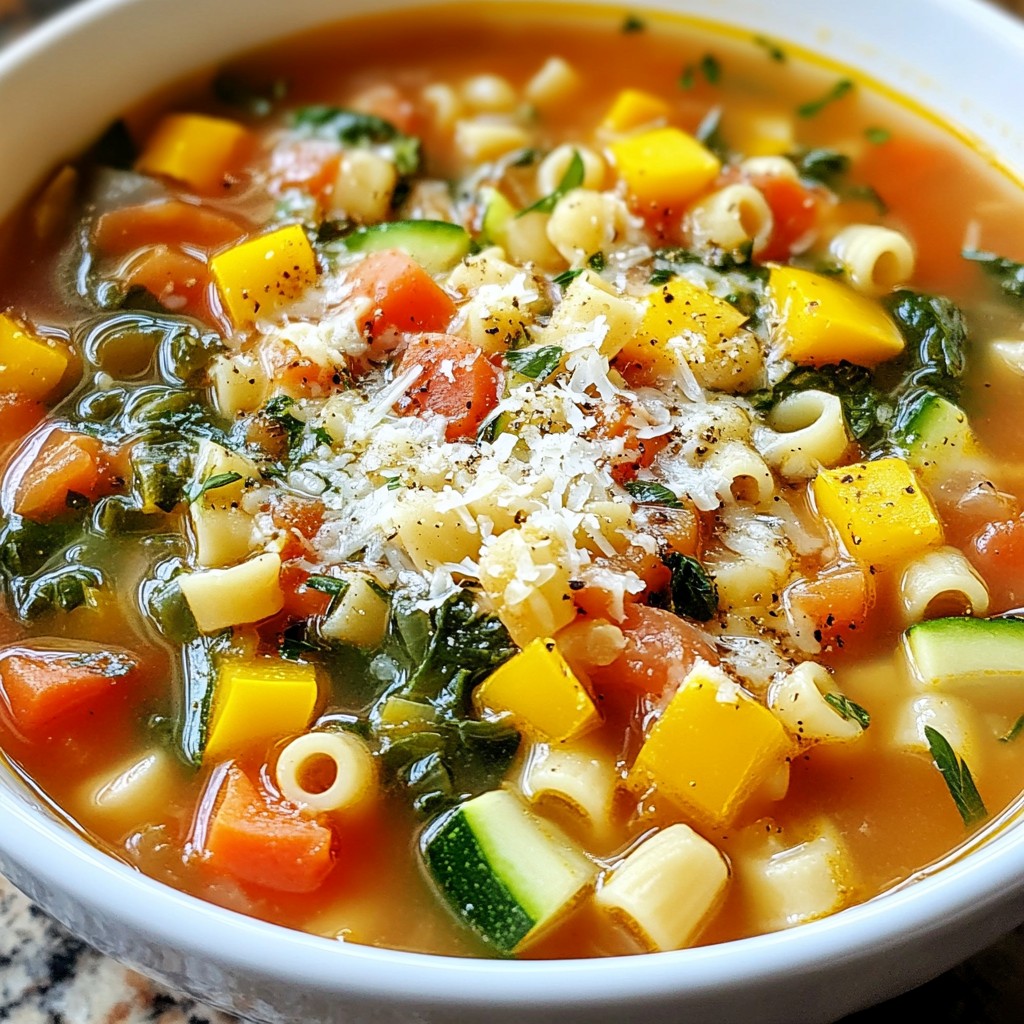
Are you ready to enjoy a bowl of happiness? My Veggie-Packed Minestrone Soup is not just delicious; it’s a healthy dish bursting with flavor. This soup is loaded with fresh veggies and is perfect for any meal. Whether you're a cooking pro or a newbie, I’ll guide you through every step to make it just right. Get ready to warm your heart and belly with this easy recipe!
Why I Love This Recipe
- Fresh Ingredients: This soup is packed with vibrant, garden-fresh vegetables that add both flavor and nutrition.
- Customizable: You can easily swap in your favorite vegetables or beans to make this recipe your own.
- Comforting and Hearty: The combination of beans, pasta, and broth creates a satisfying dish that warms the soul.
- Easy to Prepare: With simple steps and minimal prep time, this recipe is perfect for busy weeknights.
Ingredients
List of Ingredients
- 2 tablespoons extra virgin olive oil
- 1 medium yellow onion, finely chopped
- 2 garlic cloves, minced
- 2 medium carrots, peeled and diced
- 2 celery stalks, diced
- 1 medium zucchini, diced
- 1 yellow bell pepper, diced
- 1 cup green beans, trimmed and cut into 1-inch pieces
- 1 can (14 oz) diced tomatoes, with juices
- 4 cups low-sodium vegetable broth
- 1 teaspoon dried oregano
- 1 teaspoon dried basil
- Sea salt and freshly cracked black pepper, to taste
- 1 can (15 oz) kidney beans, drained and rinsed
- 1 cup small pasta (such as ditalini or elbow)
- 2 cups fresh spinach or kale, roughly chopped
- Grated Parmesan cheese (optional, for serving)
Notes on Ingredient Quality
When making minestrone soup, fresh ingredients matter. Use ripe tomatoes for rich flavor. Buy firm zucchini and bright green beans. Choose organic vegetables if you can. They taste better and are often more nutritious. Low-sodium broth helps control salt levels. This keeps the soup healthy. Always check dates on canned goods. Fresh herbs boost flavor more than dried ones.
Optional Add-ins
You can customize your minestrone soup. Try adding:
- Chopped kale or Swiss chard for extra greens.
- Sweet corn for a hint of sweetness.
- Peas for a pop of color and flavor.
- Cooked chicken or turkey for added protein.
- A splash of lemon juice for brightness.
These add-ins make your soup unique and fun! Feel free to mix and match based on what you have on hand.
Step-by-Step Instructions
Preparation Process
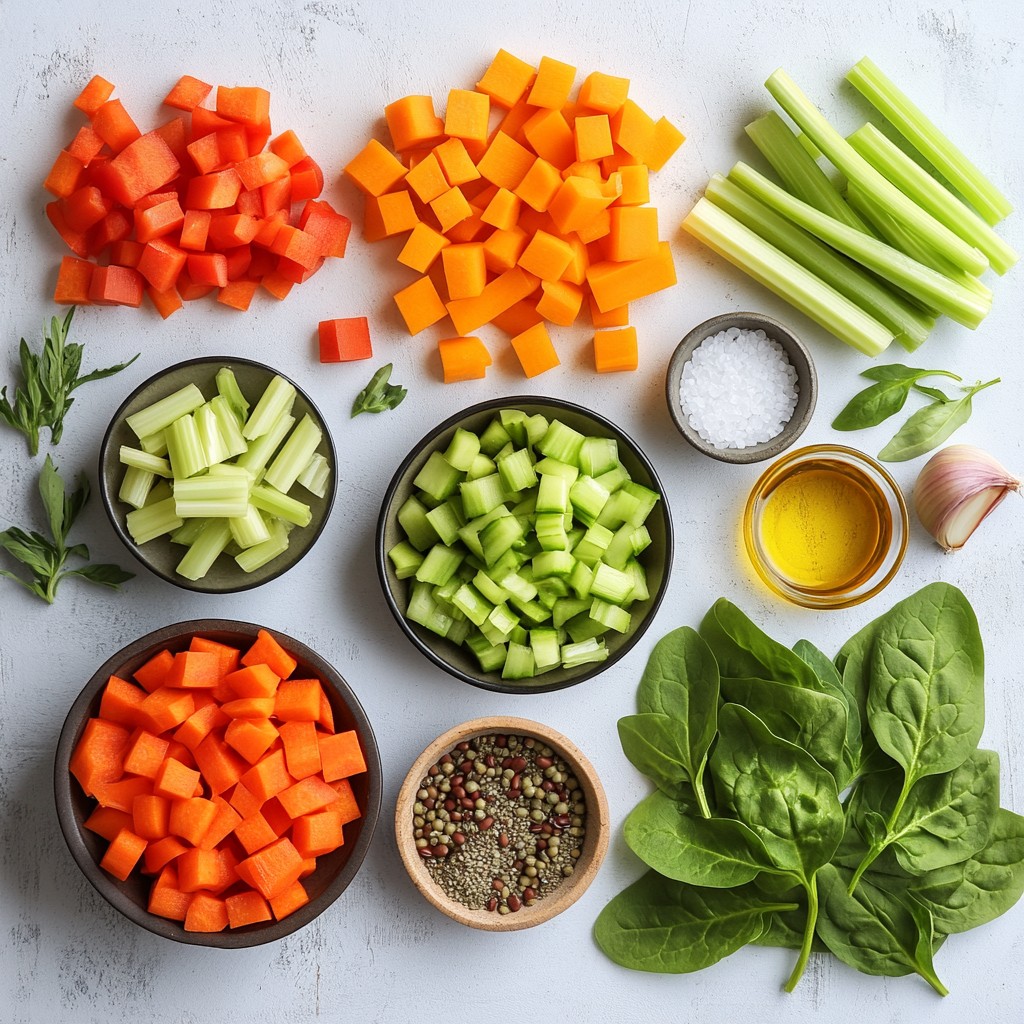
Start by gathering all your ingredients. Having everything ready makes cooking easy and fun. Chop the onion finely and mince the garlic. Peel and dice the carrots, and dice the celery. Next, slice the zucchini and yellow bell pepper. Trim the green beans and cut them into 1-inch pieces.
Cooking Method
1. Heat 2 tablespoons of extra virgin olive oil in a large pot over medium heat.
2. Add your chopped onion and sauté it for 3 minutes until it softens.
3. Stir in the minced garlic, diced carrots, and celery. Cook for 5 minutes, stirring often.
4. Add the diced zucchini, yellow bell pepper, and green beans. Sauté these for another 4 to 5 minutes.
5. Pour in the can of diced tomatoes with their juices and the 4 cups of vegetable broth.
6. Add 1 teaspoon each of dried oregano and dried basil. Season with sea salt and black pepper.
7. Increase the heat and bring the soup to a boil. Once boiling, reduce the heat to low and simmer uncovered for 15 minutes.
8. Add the drained kidney beans and 1 cup of small pasta. Simmer for another 8 to 10 minutes until the pasta cooks al dente.
9. Gently stir in the chopped spinach or kale. Let it wilt into the soup for added color and nutrition.
Final Touches
After cooking, taste the soup. Add more salt or pepper if needed. Remove the pot from heat and let it rest for a few minutes. This step helps the flavors deepen. When ready to serve, ladle the soup into deep bowls. Top with grated Parmesan cheese and a drizzle of olive oil for extra flavor. Enjoy this colorful, hearty dish!
Tips & Tricks
Suggestions for Perfect Flavor
To bring out the best in your veggie-packed minestrone soup, focus on the base. Start by finely chopping your onion. The smaller the pieces, the more flavor they release. Sauté the onion until it's soft and translucent. This step adds depth to the soup. Don't rush it!
When you add garlic, do so just after the onion. This way, it cooks lightly without burning. Burning garlic can turn bitter. For herbs, dried oregano and basil are key. Add them early in the cooking. This lets their flavors blend into the soup. Adjust seasoning at the end. Taste as you go!
Cooking Techniques to Enhance Texture
Texture matters in soup. You want a mix of soft and tender veggies. After sautéing your base, add the heartier vegetables first. Carrots and celery take longer to cook. Let them soften before adding zucchini and bell pepper.
Don't forget about the beans and pasta! Add the kidney beans and pasta only when the soup is almost done. This keeps them from becoming mushy. When the pasta is al dente, stir in the fresh spinach or kale last. This way, they wilt perfectly without losing all their color.
Storage Recommendations for Leftovers
Minestrone soup stores well. Let it cool before putting it in the fridge. Use an airtight container to keep it fresh. It can last up to five days in the fridge. For longer storage, freeze the soup.
To freeze, portion it into containers. Leave some space at the top. The soup will expand when it freezes. When reheating, add a splash of broth or water. This helps regain its creamy texture. Enjoy your tasty leftovers!
Pro Tips
- Use Fresh Herbs: Fresh herbs like basil and parsley can elevate the flavor of your minestrone soup. Add them at the end of cooking for the best aroma and taste.
- Customize Your Vegetables: Feel free to swap in your favorite seasonal vegetables or whatever you have on hand. This soup is versatile and adaptable!
- Cook Pasta Separately: For a heartier soup, cook the pasta separately and add it just before serving to prevent it from becoming mushy in the soup.
- Add a Kick: If you enjoy a bit of heat, consider adding a pinch of red pepper flakes or a splash of hot sauce to the soup for an extra layer of flavor.
Variations
Substitutions for Seasonal Vegetables
You can change the veggies in this soup based on what you have. For spring, try peas or asparagus. In summer, add fresh corn or tomatoes. Fall is great for butternut squash or pumpkin. Winter calls for hearty greens like collard greens. Use what you love or what is fresh in your area. This way, your soup stays exciting and new.
Vegan or Gluten-Free Adjustments
To make this soup vegan, skip the Parmesan cheese on top. You can add nutritional yeast for a cheesy flavor. For gluten-free options, swap out the small pasta with a gluten-free pasta. Just be sure to check the package to avoid any hidden gluten. You can also use rice or quinoa instead of pasta to keep it satisfying.
Flavor Enhancements and Additional Ingredients
Want to kick up the taste? Add a splash of lemon juice before serving. This adds brightness to the soup. You can also toss in some fresh herbs like parsley or basil right before serving. For a spicy kick, add red pepper flakes during cooking. This adds warmth without overpowering the other flavors. Experiment with these ideas to find your perfect bowl of soup!
Nutritional Information
Health Benefits of Veggie-Packed Minestrone Soup
Minestrone soup is a great way to eat more veggies. It is full of fiber, which helps digestion. The fresh vegetables provide vitamins and minerals that keep you healthy. Carrots offer vitamin A to support your eyes. Spinach gives you iron, which helps your blood. Beans add protein, keeping you full longer. Plus, this soup is low in fat, making it a smart choice for meals.
Caloric Breakdown and Macronutrients
A serving of minestrone soup contains about 200 calories. It has:
- Protein: 10 grams
- Carbohydrates: 30 grams
- Fat: 5 grams
The small pasta and beans provide carbs and protein, while olive oil adds healthy fats. This balance fuels your body without excess calories.
Serving Suggestions and Meal Pairing Ideas
Serve minestrone soup hot in colorful bowls. You can add fresh bread on the side for dipping. A simple salad pairs well, adding crunch and freshness. For a twist, try a sprinkle of lemon juice on top. This adds brightness to every bite. You can also enjoy it with a glass of light red wine for a cozy touch.
FAQs
Can I use frozen vegetables?
Yes, you can use frozen vegetables in this soup. They make cooking easier and quicker. Frozen veggies are often picked at peak freshness. This means they keep their flavor and nutrients. Just add them to the pot in place of fresh ones. No need to thaw them first. Just cook them a bit longer until they are tender.
How long does minestrone soup last in the fridge?
Minestrone soup can last up to five days in the fridge. Make sure to store it in an airtight container. This keeps it fresh and tasty. If you want it to last longer, you can freeze it. It will stay good for about three months in the freezer.
What is the best way to reheat minestrone soup?
The best way to reheat minestrone soup is on the stove. Pour the soup into a pot and heat it over medium heat. Stir it often to make sure it heats evenly. You can also use the microwave. Just put the soup in a microwave-safe bowl and heat it in short bursts. Stir after each burst to avoid hot spots.
This blog post covered everything you need to know about making minestrone soup. We reviewed key ingredients, cooking steps, and helpful tips for perfect flavor. I shared ways to adjust recipes and variations for different diets. Plus, I highlighted the soup's health benefits and answered common questions.
Making minestrone soup is simple and rewarding. Use fresh ingredients and follow the steps for tasty results. Enjoy your healthy meal!