
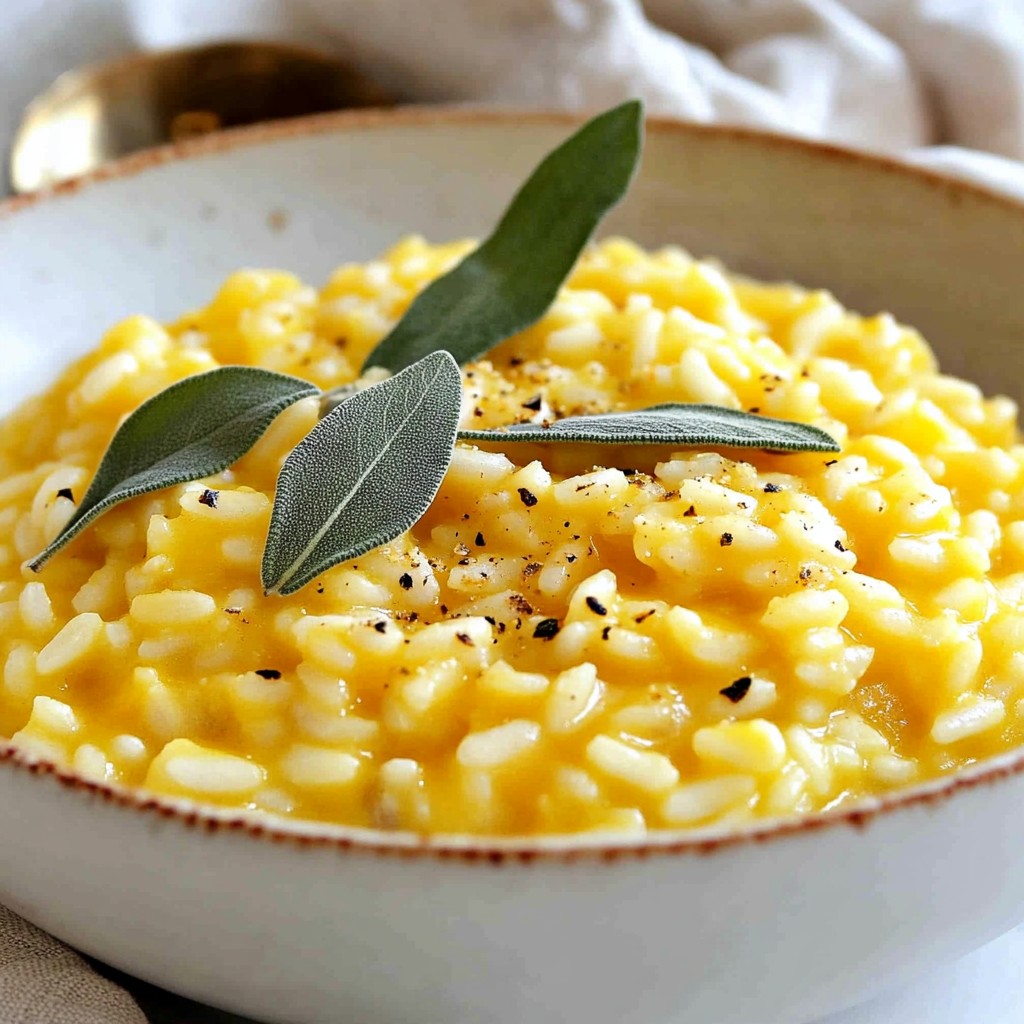
As the chill of winter sets in, nothing warms the soul quite like a cozy meal. Today, I’m excited to share my Cozy Pumpkin Sage Risotto recipe. This creamy dish blends rich pumpkin and savory sage, making it a perfect comfort dinner. With just a few simple ingredients and steps, you’ll have a meal that soothes the body and delights the taste buds. Let’s dive into the warmth of winter cooking!
Why I Love This Recipe
- Comforting Flavors: This risotto combines the warm, cozy flavors of pumpkin and sage, making it the perfect dish for chilly evenings.
- Easy to Make: With simple ingredients and straightforward steps, this recipe is approachable for cooks of all skill levels.
- Customizable: You can easily adjust the flavors by adding more herbs or spices, or even incorporating other vegetables based on your preference.
- Impressive Presentation: Garnished with fresh sage and a drizzle of olive oil, this dish looks as good as it tastes, making it perfect for entertaining!
Ingredients
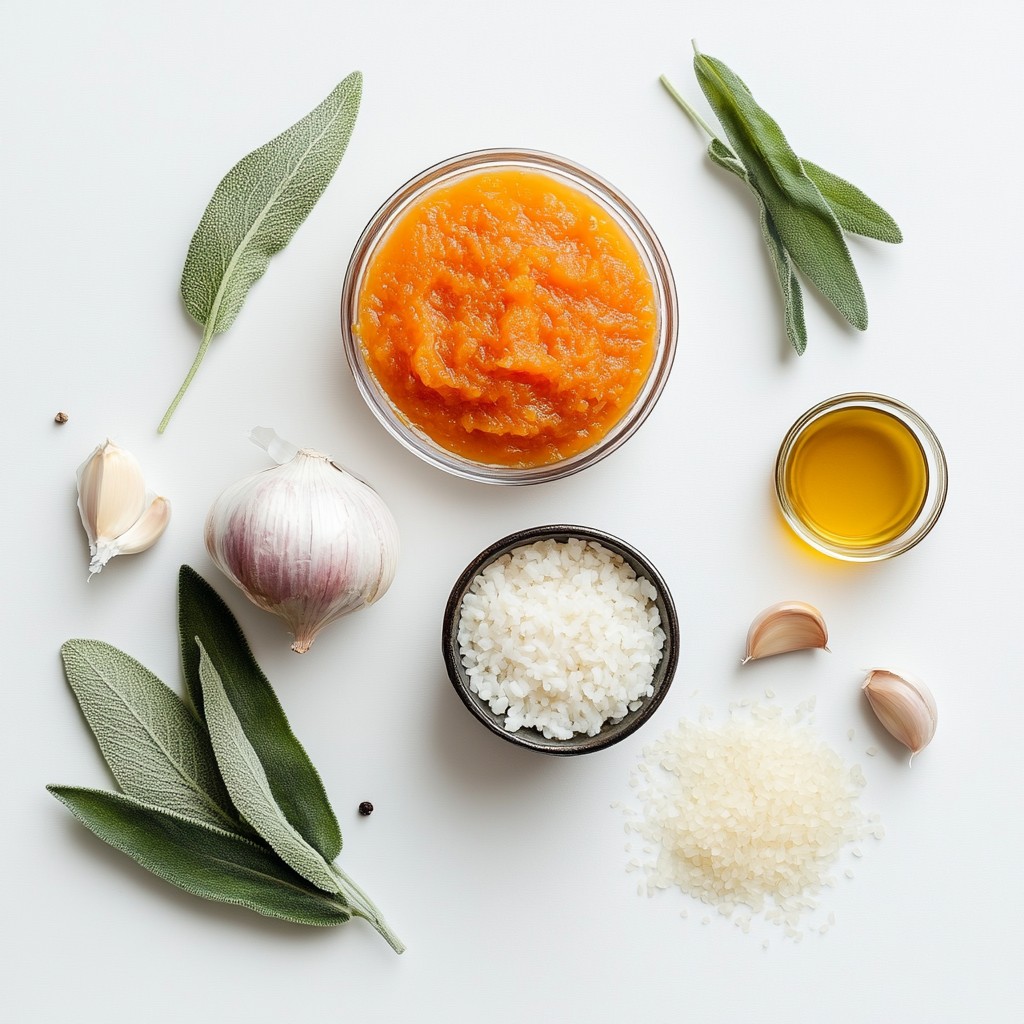
Main Ingredients for Cozy Pumpkin Sage Risotto
- 1 cup Arborio rice
- 4 cups vegetable broth, preferably low-sodium
- 1 cup pumpkin puree, either homemade or canned
- 1 medium onion, finely chopped
- 2 cloves garlic, minced
- 1 tablespoon fresh sage, finely chopped (or 1 teaspoon dried sage)
For this cozy risotto, Arborio rice is key. It gives the dish its creamy texture. I always use low-sodium vegetable broth for a balanced flavor. Pumpkin puree adds a rich sweetness. The onion and garlic bring depth, while sage adds a warm, herbal note.
Optional Ingredients for Enhanced Flavor
- 3 tablespoons grated Parmesan cheese (optional for a richer taste)
- 2 tablespoons extra virgin olive oil
- Salt and freshly ground black pepper to taste
Adding Parmesan makes the risotto more decadent. Extra virgin olive oil enriches the dish and enhances the flavors. Don't forget to season with salt and pepper to taste. This step can elevate the dish, making it even more comforting.
Step-by-Step Instructions
Preparing the Broth and Sautéing Aromatics
1. First, heat your vegetable broth in a medium saucepan over low heat. Keep it warm while you cook. This helps the risotto cook smoothly.
2. Next, in a large skillet or heavy pot, warm the olive oil over medium heat.
3. Add the finely chopped onion to the skillet. Sauté it for about 5 minutes. Stir it often until it turns soft and transparent.
4. Now, add the minced garlic and chopped sage to the pan. Cook for one more minute. Stir it continuously. This keeps the garlic from burning.
Cooking the Risotto
1. It’s time to add the Arborio rice to the skillet. Stir it well for about 2 minutes. This toasting step makes the rice flavorful.
2. Carefully ladle in one portion of the warm broth. Stir all the time. Let the rice soak up the liquid before adding more.
3. Keep adding broth one ladle at a time. Stir frequently for about 20-25 minutes. The rice should be creamy and al dente when done.
Finishing Touches
1. When the risotto is creamy and tender, gently fold in the pumpkin puree. Mix it well until it’s fully heated.
2. If you want extra creaminess, stir in the grated Parmesan cheese now.
3. Season with salt and fresh black pepper to taste. Adjust as needed for flavor.
4. Lastly, remove the skillet from heat. Let the risotto rest for a couple of minutes to thicken before serving.
Tips & Tricks
Perfecting the Risotto Texture
To make great risotto, you must stir it often. Stirring helps the rice release its starch. This starch creates a creamy texture. Use a wooden spoon to mix the rice gently but firmly.
The goal is to achieve al dente rice. Al dente means the rice is soft on the outside but firm in the center. When you bite into it, you should feel a little resistance. Check the rice after 20 minutes. If it’s too hard, keep cooking and stirring.
Enhancing Flavor
Using fresh sage gives your risotto a bright taste. Fresh sage has a stronger flavor than dried sage. If you use dried sage, use less. One teaspoon should be enough.
You can add more depth with other seasonings. A touch of nutmeg can enhance the pumpkin flavor. You might also try a pinch of cayenne for warmth. Adjust the salt and pepper for your taste. Don’t forget to taste as you go!
Pro Tips
- Use Fresh Sage: Fresh sage enhances the flavor significantly. If using dried sage, be mindful that it’s more concentrated; use less to avoid overpowering the dish.
- Consistent Stirring: Stirring the risotto continuously helps release the starch from the rice, creating a creamier texture. Don’t rush this step!
- Warm Broth is Key: Keeping the vegetable broth warm while cooking helps the risotto maintain an even cooking temperature, resulting in better absorption of flavors.
- Rest Before Serving: Allowing the risotto to rest for a couple of minutes off the heat helps it thicken and enhances the overall creaminess.
Variations
Alternative Ingredients for Customization
You can easily switch up this cozy dish. Try using different types of squash. Butternut or acorn squash works great. They add a nice sweetness to the risotto. You can also add proteins like chicken or sausage for a heartier meal. Cook the meat first and set it aside. Stir it in before serving.
Dairy-Free or Vegan Options
For a dairy-free or vegan version, make a few swaps. Use nutritional yeast instead of cheese. It gives a cheesy flavor without dairy. Opt for vegetable broth that is free from animal products. This way, you still keep the dish rich and tasty.
Storage Info
How to Store Leftover Risotto
To keep your risotto fresh, let it cool first. Place it in an airtight container. You can store it in the fridge for up to three days. If you want to save it longer, freeze it. Scoop the risotto into freezer-safe bags or containers. Make sure to squeeze out excess air. It can last in the freezer for up to three months.
Reheating Best Practices
When you’re ready to enjoy the risotto again, gently reheat it. The best method is on the stove. Add a splash of vegetable broth or water to the skillet. Stir it over low heat until it warms up. This keeps it creamy and prevents it from drying out. You can also use a microwave, but be careful. Heat it in short bursts, stirring in between. This way, it heats evenly and stays delicious.
FAQs
Can I use brown rice instead of Arborio rice?
No, brown rice does not work as well in risotto. Arborio rice is starchy and creamy. It absorbs liquid well, making the risotto smooth. Brown rice lacks this starch. It also takes longer to cook. If you want to try a different rice, consider Carnaroli or Vialone Nano. Both give a similar creamy texture.
How can I make risotto ahead of time?
You can make risotto ahead, but it may change texture. Cook it as usual, then cool it down. Once cooled, store it in an airtight container in the fridge. When you're ready to eat, reheat it on the stove. Add a splash of broth or water to help regain creaminess. Stir frequently to avoid sticking.
What should I serve with pumpkin sage risotto?
To complement pumpkin sage risotto, consider these options:
- Side Dish Suggestions
- A simple green salad with lemon vinaigrette.
- Roasted Brussels sprouts or green beans.
- Garlic bread or crusty bread for dipping.
- Wine Pairings
- A crisp white wine like Sauvignon Blanc.
- A light red like Pinot Noir also works well.
- If you prefer, a dry sparkling wine can enhance flavors too.
In this blog post, we explored how to make cozy pumpkin sage risotto. We covered key ingredients like Arborio rice and pumpkin puree. I shared step-by-step instructions to help you cook it perfectly. Tips like stirring often improve texture, while variations add your twist. Remember, you can store leftovers and reheat them while keeping that creamy goodness. Enjoy this warm dish, and don’t hesitate to experiment with flavors and ingredients. Your kitchen can be a place for tasty creativity!